The Truth About Daily Posting

If you’re an entrepreneur or small business owner, you’ve probably heard this advice countless times: “You need to post every day to grow on social media.”
For many business owners, especially here in Utah County, that advice creates more stress than results. You’re already managing sales, operations, customer service, and leadership responsibilities. Adding daily content creation to that list often leads to rushed posts, creative fatigue, and eventual burnout.
Here’s what most people won’t tell you: posting every day is not required to grow a brand.
What actually drives growth is a smart, intentional social media strategy. This article breaks down why daily posting became such popular advice, what truly fuels growth, and how businesses can scale their presence without burning out.
How Daily Posting Became the Standard
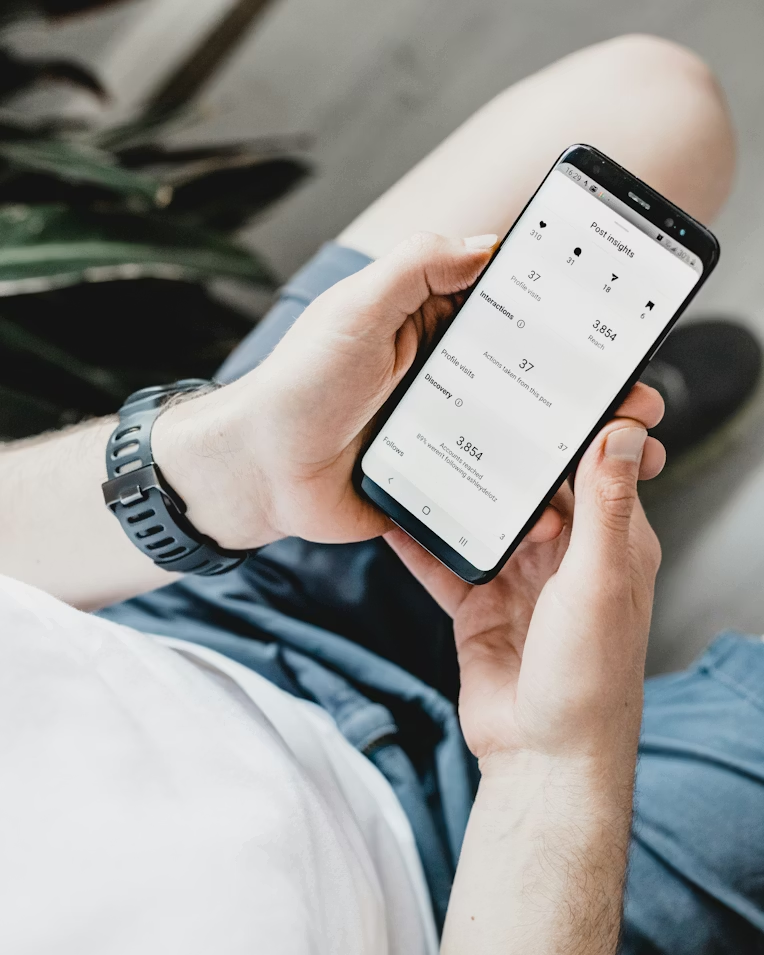
The push for daily posting didn’t come out of nowhere. In the early days of social media, platforms rewarded volume. The more you posted, the more opportunities you had to appear in feeds. At the same time, influencers and large brands with full-time content teams normalized constant output.
Over time, “consistency” gradually transformed into “post every single day.” Hustle culture amplified the message, making it seem like missing a day meant falling behind or being forgotten by the algorithm.
However, social platforms have evolved significantly. Today’s algorithms are far more sophisticated and prioritize quality over quantity. They focus on relevance, engagement, watch time, and saves and shares.
Research from HubSpot, Sprout Social, and Hootsuite consistently shows that engagement does not increase linearly with posting volume. In many cases, posting too frequently with lower-quality content actually reduces reach and performance.
Daily posting works well for full-time content creators. It doesn’t automatically work for busy business owners managing multiple responsibilities.
Why Daily Posting Often Hurts Small Businesses
For most small businesses, daily posting creates three significant challenges.
Burnout becomes inevitable. When you feel pressured to post every day, content creation becomes a burden rather than a strategic tool. Creativity diminishes, stress increases, and eventually, posting stops altogether.
Content quality suffers. Daily posting often results in filler content—posts that don’t educate, inspire, or advance your relationship with your audience. Algorithms recognize this pattern and deprioritize the content.
Brand messaging gets diluted. Without a clear strategy, daily posting can confuse your brand identity. One day you’re educational, the next promotional, the next completely off-topic. This inconsistency makes it harder for audiences to understand what you actually offer and why it matters.
The irony is that posting more frequently can actually result in slower growth.
What Actually Drives Social Media Growth
If daily posting isn’t the answer, what does work?
Clarity is foundational. A strong social media strategy starts with clear communication about who you help, what problem you solve, and why your solution is different. When your message is clear, people don’t need to see you every day to remember you. One strong, clear post can outperform five vague ones.
Consistency matters more than frequency. Real consistency is about patterns, not volume. It means posting within defined content themes, using a recognizable voice and style, and showing up regularly in a sustainable way. Posting three to four times per week with intention is often more effective than posting daily without direction.
Value-driven content earns attention. Every post should provide something meaningful—education, problem-solving, insight, or trust-building. Hootsuite’s research demonstrates that posts with higher perceived value generate more saves and shares, which are signals that matter significantly more to algorithms than raw posting frequency.
Timing and relevance amplify results. Understanding when your audience is active and what matters to them in that moment is far more important than hitting a daily quota. Strategic timing can double the performance of your content.
The Difference Between Daily Posting and Smart Posting
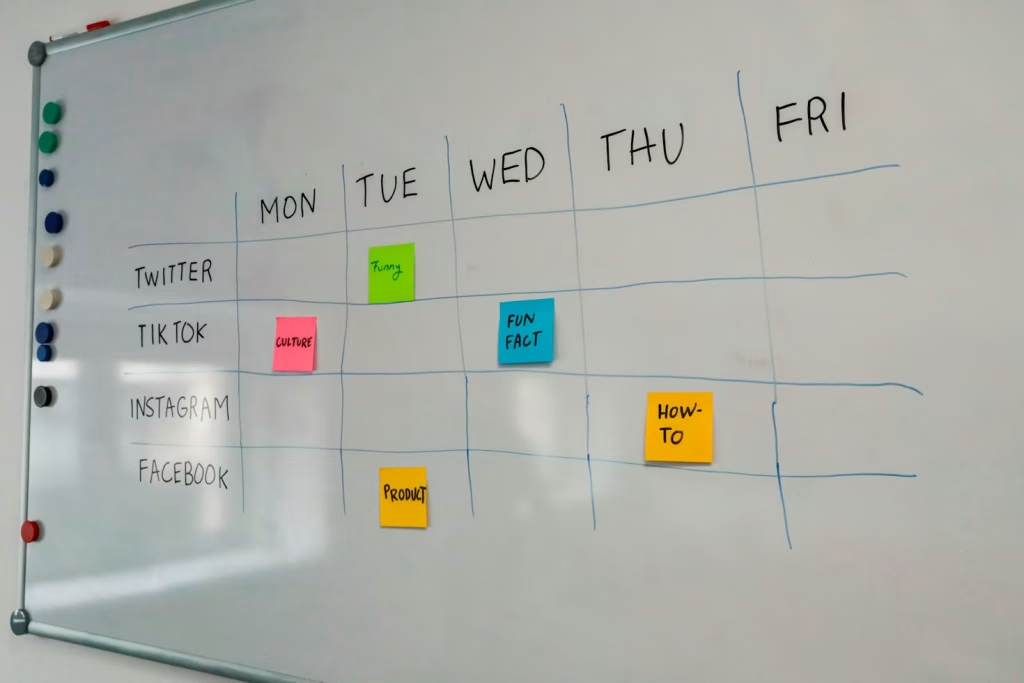
The distinction between daily posting and smart posting comes down to intention.
Daily posting often involves grabbing ideas at the last minute, posting just to stay “active,” reacting to trends without strategic alignment, and chasing algorithm changes.
Smart posting focuses on clear content pillars tied to business goals, fewer posts with stronger messaging, content planned ahead of time, and strategy driven by data rather than pressure.
Smart posting prioritizes results over appearances.
Signs Your Business Should Shift Strategy
Not every business benefits from high posting frequency. You may need to adjust your approach if engagement remains stagnant despite frequent posting, content feels rushed or repetitive, you dread the content creation process, or social media feels disconnected from actual revenue.
Reducing posting frequency doesn’t mean losing momentum. In many cases, it creates space to focus on quality and strategy—the two factors that actually drive growth.
A Practical Framework for Strategic Posting
An effective social media strategy doesn’t need to be complicated. It needs to be intentional.
Define your content pillars. Choose three to five core themes that align with your business goals. Common examples include education, behind-the-scenes insights, client results, industry analysis, and service offerings.
Match platforms to purpose. Each platform serves a different function. Instagram may build trust, TikTok may drive discovery, and LinkedIn may establish authority. Your message doesn’t need to exist everywhere in the same format.
Establish a sustainable schedule. Choose a posting frequency you can maintain long-term. For most businesses, this is two to four posts per week per platform.
Measure what matters and adjust. Focus on saves, shares, comments, and conversions—not just likes. Use performance data to refine your approach continuously.
This framework removes unnecessary pressure and replaces it with strategic control.
How Brilix Approaches Social Media Growth

At Brilix, we work with entrepreneurs and small businesses who are tired of chasing trends and burning out on daily posting. Our approach is strategy-first, not volume-first.
We focus on building clear messaging foundations, creating intentional content calendars, optimizing posting frequency by platform, and aligning social media activity with real business outcomes.
Our clients grow because every post serves a strategic purpose, not because they’re posting more frequently than their competitors.
Moving Forward
Social media growth doesn’t come from doing more. It comes from doing what matters.
If you’re a busy business owner feeling pressure to post daily, it’s time to rethink your strategy. The brands that succeed aren’t necessarily the loudest or most frequent. They’re the clearest, most consistent, and most valuable to their audience.
Strategic posting will always outperform constant posting.
Ready to Build a Smarter Strategy?
If you want growth without burnout and a strategy built around your business goals rather than algorithm anxiety, Brilix can help. Reach out today, and let’s build a social media strategy that actually works for your business.